Bedding guide
Percale or Sateen? How to Choose Sheets for Your Sleep Style
A sheet is more than a finishing layer. It is the fabric closest to your skin for hours at a time, shaping the bed’s first impression and its feel through the night. Percale tends toward crisp and airy; sateen feels smoother and more fluid. The right choice depends less on a universal ranking than on how you sleep, what you like against your skin, and how much care you want your bedding to require.
Shopping for sheets can make a simple decision feel technical. Labels introduce fibre, thread count, weave, finish and certification, often before you have touched the fabric. Yet one distinction is especially useful to understand: percale and sateen are different ways of interlacing yarns. They can make cotton feel notably different, even when the fibre itself is the same.
Percale is associated with a crisp, matte hand and an open, breathable feel. Sateen is known for a smoother surface and a subtle lustre. Neither weave is automatically better, healthier or more luxurious. One may feel invitingly cool and fresh to one person, while another prefers sateen’s soft, draping touch. Knowing the difference helps narrow the choice to the details that matter in your bedroom.
The short answer: weave changes the feel
Both percale and sateen can be made from cotton. What distinguishes them is how the lengthwise and crosswise yarns pass over and under one another during weaving. That pattern affects the fabric’s surface, drape and general feel. It can also influence how quickly the sheet seems to warm against the body, although room temperature, bedding layers, fibre quality and personal comfort all play a part.
Percale typically uses a simple, balanced weave, with yarns passing over and under each other in a regular pattern. The resulting fabric has a matte appearance and a clean, crisp touch. Sateen uses a different arrangement that brings more yarn to the surface, creating a smoother feel and a gentle sheen. The contrast is easy to describe, but it is best understood by touch: percale feels fresh and structured; sateen feels sleek and supple.
These are tendencies, not guarantees. Cotton quality, yarn construction, finishing, fabric weight and laundering can alter the experience. A fine percale may feel softer than a heavier one, while a sateen’s warmth and drape can vary from product to product. If possible, look beyond a weave name and consider the full fabric description, care instructions and the way you tend to sleep.
Why choose percale?
Percale appeals to people who like the bed to feel crisp, light and unfussy. Its matte surface has a fresh, almost just-made quality, and its structure can feel less clingy than a smoother, more draped fabric. For sleepers who often feel warm, or who live in a warmer climate, that airy impression may be particularly appealing. It does not actively cool the body, but breathable cotton and a light construction can make the bed feel more comfortable to some hot sleepers.
The feel of percale can change with use. New sheets may seem firm or crisp at first; regular washing often softens them. Some people enjoy that gradual easing without losing the fabric’s characteristic structure. Others prefer a smoother hand from the first night and may find percale too crisp. Personal preference matters more than the idea that one texture is objectively superior.
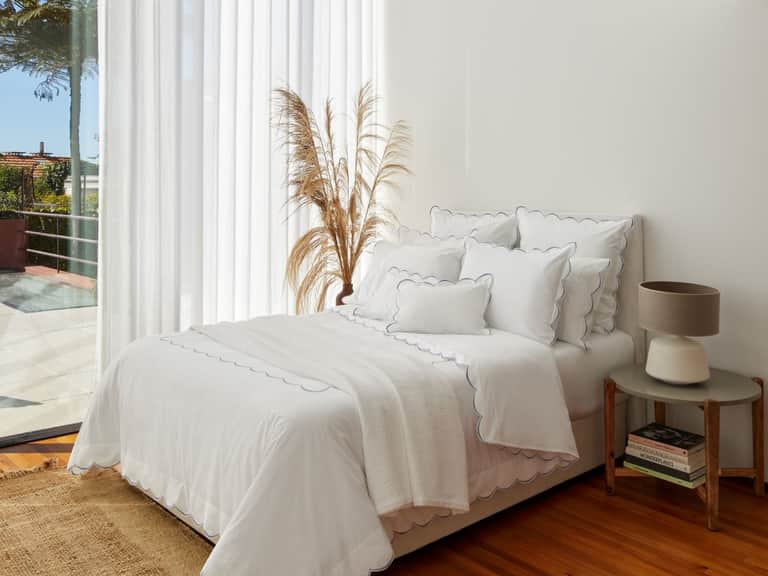
Percale also works well for people who favour a simple, clean visual style. Its matte finish sits comfortably in both restrained and decorative bedrooms. The Bovi Nazaré Percale Duvet Cover, for example, combines 100% cotton percale with a crisp feel and a scalloped edge. It is a duvet cover rather than a sheet set, but it illustrates how the weave can pair an airy, classic surface with a more considered design detail.
Why choose sateen?
Sateen is often the choice for someone who wants a silky-smooth surface and a softer, more fluid drape. Its subtle sheen gives the fabric a polished appearance, and the hand can feel gentle and close against the skin. If crispness sounds more like a hotel sheet than a comfort, sateen may feel more welcoming.
That smoothness can make sateen seem warmer than percale to some sleepers. The fabric’s surface and drape may feel less airy, especially when the bed is heavily layered or the room is warm. This is not a rule that applies to every product or sleeper: fibre, weight, bedding arrangement and individual temperature comfort all matter. Still, if you regularly wake feeling too warm, the weave is worth considering alongside the duvet, mattress and room environment.
Sateen’s lustre also changes the look of a bed. It reflects light more readily than a matte percale, creating a soft sheen that can make solid colours feel richer. For people who value a smooth hand and a slightly more dressed appearance, that combination can be part of the appeal. The trade-off is not simply practical versus elegant; percale can be refined, too. The decision is about which texture and look feel right to you.
A practical comparison
| Consideration | Percale | Sateen |
|---|---|---|
| Surface | Matte, crisp and structured | Smooth, soft and subtly lustrous |
| Drape | Often feels lighter and more tailored | Often feels more fluid and close to the body |
| Temperature impression | Commonly preferred by people who like an airy bed | May feel warmer to some sleepers |
| Best-known appeal | Freshness, crispness and a clean finish | Silky touch, softness and a gentle sheen |
| Care | Follow the garment or bedding label; avoid excessive heat | Follow the garment or bedding label; avoid excessive heat |
The table describes common impressions, not a promise about every set. Two fabrics with the same weave can still differ in weight and finish. If you can handle a sample, notice whether the fabric feels comfortable on bare skin, how it falls when lifted, and whether its texture seems pleasant after a few minutes rather than only on first contact.
Start with how you sleep
Think about your actual nights, not only the bedroom you imagine having. Do you often kick off the duvet? Do you wake warm, or do you seek out extra layers? Do you like a crisp pillowcase, or prefer a smooth surface under your cheek? These everyday observations are a better guide than a broad claim that a particular weave suits everyone.
- If you run warm: You may want to try percale for its airy, crisp feel. Also consider a lighter duvet, breathable sleepwear and the temperature of the room.
- If you like a smooth surface: Sateen may be a natural starting point, particularly if you enjoy a soft hand and subtle sheen.
- If you want a freshly made-bed feel: Percale’s more structured, matte finish may match your preference.
- If you prefer a relaxed drape: Sateen may feel more fluid against the body and across the bed.
- If you share a bed: Compare preferences openly. A split set or different pillowcases may be worth considering if one person favours crispness and the other softness.
Sleep position is not a decisive weave test, but it can help you describe your preferences. Side sleepers often notice the feel of the pillowcase against the face; back sleepers may care more about how the sheet rests across the shoulders and chest. People who move frequently may prefer a fabric that does not feel clingy. These are individual impressions, not rules about what a particular position requires.
Thread count is only one part of the story
Thread count refers to the number of threads counted within a defined area of fabric. It can provide some information, but it does not tell you everything about the quality or comfort of sheets. Fibre, yarn quality, weave, finishing and construction all matter. A higher number by itself is not a guarantee of better sleep, greater breathability or longer life.
When comparing options, treat thread count as one specification among several. Look for clear information about fibre content and weave, along with practical details such as fitted-sheet depth, sizing and washing instructions. A well-made sheet that fits the mattress and suits your preferences is likely to be more satisfying than a set chosen solely for a prominent number on the label.
Fibre origin and certification may matter to shoppers who want more information about how materials were produced. Read the specific product’s documentation and understand what a certification covers; do not assume that a general phrase such as “natural” explains every part of a textile’s supply chain. In the end, material transparency and a comfortable feel are complementary considerations.
Care, washing and longevity
Good care starts with the label. Cotton bedding is commonly machine washable, but recommended water temperature, cycle, drying method and bleach guidance vary by product. Follow the manufacturer’s directions rather than assuming all percale or all sateen can be treated identically. Washing new sheets before use may also be advised by the maker.
Use a detergent appropriate for the fabric and avoid overloading the washing machine. Bedding needs enough room to move through the wash and rinse. Excessive heat in a dryer can stress fibres and contribute to shrinkage or wear, so use the care label’s recommended setting. If the instructions permit, removing sheets promptly and smoothing them while slightly damp can reduce creasing.
Neither weave is immune to wear. Regular laundering, friction, detergent choice and drying conditions all affect how fabric ages. Percale may soften over repeated washes; that can be part of its appeal, though the exact result depends on construction. Sateen’s smooth surface may change with use as well. Rotating between sets can give each one a rest and make it easier to keep a consistent laundry routine.
Clean bedding is a practical part of bedroom care, but there is no single washing schedule that fits every household. Consider your routine, climate, allergies, pets and the product’s instructions. A washable duvet cover can be a useful outer layer to launder regularly, while sheets and pillowcases usually need more frequent attention because they sit directly against the body. Adapt the routine to your circumstances rather than relying on an inflexible rule.
Consider the whole bed, not just the sheet
A sheet is one element in a small sleep environment. A warm duvet can overwhelm the airy feel of percale; a cool room can make sateen’s softness particularly pleasant. Mattress protectors, blankets, nightwear and room ventilation also contribute to how warm or cool the bed feels. If you are uncomfortable at night, changing the weave may help, but it is only one possible adjustment.
Fit matters, too. Check mattress dimensions and depth before ordering a fitted sheet, especially if the mattress has a topper or a substantial pillow top. A sheet that slips off or pulls tight can disrupt the experience regardless of its fabric. For a duvet cover, confirm the dimensions of both the cover and duvet so the filling sits evenly rather than bunching at the corners.
Visual preferences should not be dismissed as superficial. The bed occupies a large part of many bedrooms, and the sight of a neatly made bed can influence how settled the room feels. Percale’s matte finish and sateen’s soft glow create different moods. Choose a colour and texture you will enjoy seeing every day, while keeping your priorities—comfort, fit and manageable care—at the centre of the decision.
A simple way to make your choice
If you are uncertain, begin with the sensation you want most. Choose percale as a first experiment if “crisp,” “fresh” and “airy” sound appealing. Start with sateen if “smooth,” “soft” and “draped” describe the bed you want. Then check product details, care requirements and sizing. Where available, a fabric swatch or the chance to handle a sample can make the decision more concrete.
You can also make a small, low-pressure test of your preference. Change one layer at a time, rather than replacing every piece of bedding at once. A pillowcase or duvet cover can give you a useful sense of a weave’s feel before you commit to a full set. Keep track of whether you feel too warm, whether the texture remains comfortable through the night and how the fabric looks after laundering.
For a household divided between the two, there is no requirement to make every layer match. Some people choose percale sheets and a sateen duvet cover, or use different pillowcases. A bed can be built around comfort rather than a single textile rule. Just be mindful that mixing fabrics can produce a different visual finish and may require checking separate care instructions.
Frequently asked questions
Are percale sheets cooler than sateen?
Percale often feels more breathable and crisp, so some hot sleepers prefer it. But warmth depends on the fabric’s weight, fibre, room conditions, duvet and personal comfort. The weave alone cannot guarantee a cooler night.
Is sateen the same as satin?
No. Sateen is a weave commonly made with cotton, while satin describes a different weave often associated with filament fibres. The names may sound alike, but the materials and resulting fabrics are not necessarily the same.
Will percale always feel stiff?
Not necessarily. Percale is known for crispness, and some new sheets may feel firm at first, but the hand can soften with laundering. Fabric quality and finishing make a difference.
Does a higher thread count mean better sheets?
Not on its own. Thread count is one specification, not a complete measure of comfort or durability. Consider weave, fibre, construction, finish, fit and care information together.
Can I mix percale and sateen?
Yes. You can combine different weaves across sheets, pillowcases and duvet covers if you enjoy the result. Check each item’s care instructions and choose colours and textures that work together in your room.
The right sheets are the ones you welcome at bedtime
Percale and sateen offer two distinct ways to experience cotton bedding. One is crisp and matte, the other smooth and softly lustrous. Their differences can guide your search, but neither label can predict every sleeper’s comfort or every fabric’s performance. Use the weave as a starting point, then consider temperature, touch, fit, care and the rest of your bedding.
The best choice is not the one with the grandest description or the highest number on its label. It is the fabric that feels good when you turn in, works with the way you sleep and remains easy to live with after the first wash. That is a modest standard, and a useful one: a better bed begins with details you notice night after night.